Home Theater System Buying Guide: Features, Sound Quality, and Budget
Say you have a 14-by-16-foot room, an 85-inch TV on the way, and a budget you haven’t pinned down. Where do you begin? Most people go straight to the screen. We’d begin with the walls, the ceiling, and the spot where the couch will sit. These things will decide what the screen and speakers can do.
This guide covers the parts of a custom theater system and what separates good sound from merely loud sound. Also learn how to split up a budget. It’s written for homeowners in Corpus Christi and anywhere else, whether you’re setting up a media corner or planning a full custom home theater.
Measure Before You Shop
Use a tape measure to record the room's dimensions (length, width, and ceiling height). Note the location of all windows, doors, and air vents. For a better display, a low ceiling will have a significant impact on some overhead speaker options.
Now, you need to place your seats, which will determine your screen size. According to the advice of THX and SMPTE, the optimum viewing distance is approximately 1.2 to 1.6 times the diagonal of the screen.
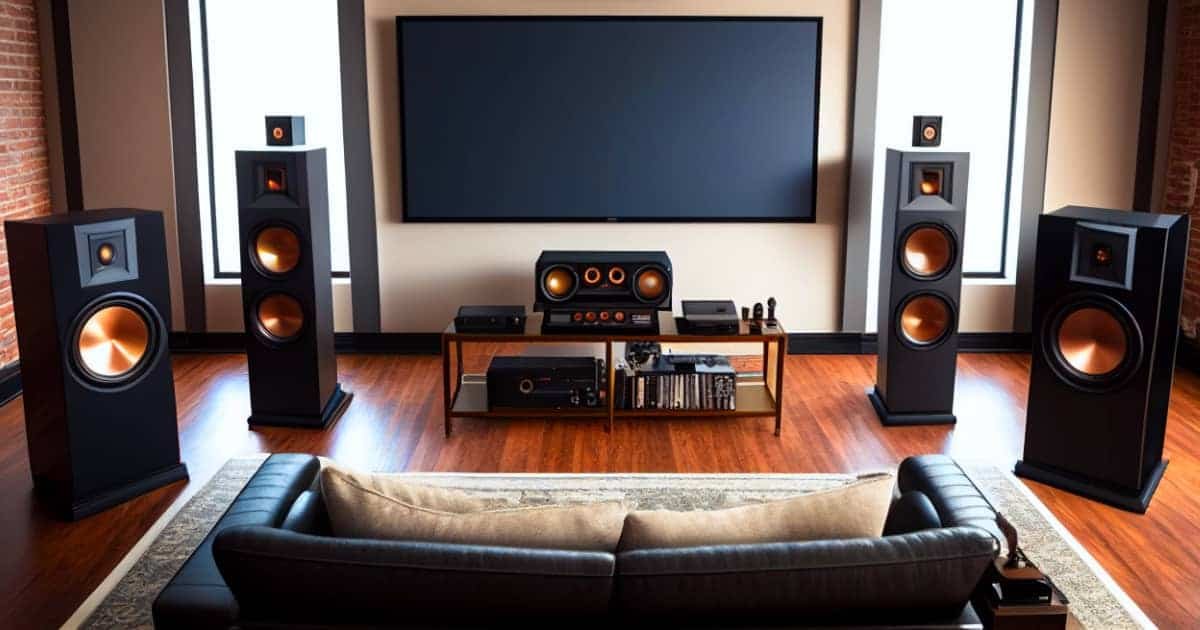
The couch is 120 inches (10 feet) away from the screen wall in our 14'x16' room. That means a screen size of 75-100 inches would be a perfect fit. Many people are seated further away than these numbers indicate. It is for this reason that a screen can appear small when it is hung on a wall.
Heat is the other thing to measure for. A projector or a stack of receivers in a closed cabinet will warm a small space fast. Leave room for air to move, or add a vent fan when the cabinet is built.
TV or Projector
A TV is the obvious choice if the room has large windows or is used as a family room. It remains bright in daylight and needs no special screen. You can also use it for the evening news and movies.
A projector offers you a larger picture than a TV. You will need a dark room to have the best quality. Any light that falls on the screen washes out the image. Therefore, ensure the room is dark.
Sound Quality: What to Pay Attention To
The picture captures the interest, but the sound creates the size of the film. Speaker packages are named 5.1 or 7.1.4. The 5 is the speakers around the room; the 1 is the subwoofer. With Dolby Atmos, the third number refers to overhead speakers. This means a 5.1.2 system will have five speakers at ear level, a subwoofer, and two speakers overhead.
The center speaker speaks most of the dialogue. If it's inexpensive, voices may sound thin even if the rest of the system is great.
You can also select the appearance of the speakers. The in-wall and in-ceiling models, which go away from the room, will create a clean finish. Freestanding speakers are simpler to relocate and upgrade in the future.
One channel per speaker is required at the receiver: 7 channels for a 5.1.2 layout, 11 channels for a 7.1.4 layout. Ensure that it decodes the formats you'll be using. The placement of the subwoofers is primarily a matter of trial and error.
If the bass is low in one seat and high in the next, it may be possible to relocate the sub a few feet. Sometimes it gets better if there are 2 subs. Echo is caused by hard walls and bare floors. Adding a rug, curtains, or a few acoustic panels can do more to enhance the sound than a more expensive speaker.
Most receivers have automatic set-up features that are designed to sense room size using a small microphone.
Setting a Realistic Budget
Home theaters don't always come with a fixed price. On the other end of the same hobby is a dedicated space with a projector, ceiling speakers, and hidden wires, or a TV and soundbar. It's helpful to divide the budget into parts: Display/projector/screen, receiver, speaker(s), subwoofer, wiring/labor, room (seating, lighting, acoustics).
Some practices have systems in place to stop the numbers from being lost. The speaker and wiring to the wall can last for several TV generations, and many people invest more in the sound and replace the TV when they upgrade to a newer model. When you can't afford to purchase everything at once, do the wiring for the entire system at once and install the components as you can afford them later on, as it is more expensive to open walls later. Request a detailed estimate, too. Installation and calibration should appear as separate lines and not come as a shock at the end.
What a Custom Theater Installation Adds
There's one remote or app that controls everything, a network powerful enough to stream 4K, a ventilated equipment rack, and wiring behind the walls — the parts you don't see, all of which are managed by a custom theater installation. It's a simple weekend project to install a TV and soundbar. In-wall speakers or a projector add to the mix, and the job takes a turn for the worse, and that's where custom home installation pays off. It's much easier to correct the drywall cutting the first time.
For Corpus Christi, there are a couple of questions to ask any installer. Heat and humidity from the summer months are hard on electronics, so know how the rack will be ventilated. Power surges and outages are common during storm season, so be sure to ask about surge protection. You can find out more about Red Alarm's Custom Home Theater Installation service on our website, and we have been serving the Corpus Christi area for over 12 years!
Protecting Your Equipment
A room full of theater gear is worth protecting. Smart home security can link door sensors, lights, and cameras, so you get an alert on your phone even when you’re in a dark room with the volume up. Our guide to Smart Home Security Systems explains how those pieces connect. If you want cameras covering the garage, the back door, or the windows near the media room, take a look at our Security Cameras in Corpus Christi, TX options.
Quick Answers
Do I need Dolby Atmos?
Not right away. A solid 5.1 system is a good base, and many receivers can add height speakers later. If the walls are open, running cable for them now is far easier than doing it afterward.
Is a soundbar enough?
For a small room or casual TV watching, yes. It’s a big step up from built-in TV speakers, though it can’t surround you the way separate speakers can.
Ready to Plan Your Custom Theater System?
Start with the room and a rough budget. Measure, sketch where the seats go, and list what you actually watch. Then bring in an installer who will see the space in person before recommending anything. If that sounds like what you need, contact Red Alarm, zzzzand we’ll talk through the room and the budget.